Start: Alton Station, End: Farnham Station, Distance: 11 miles, Difficulty: Easy
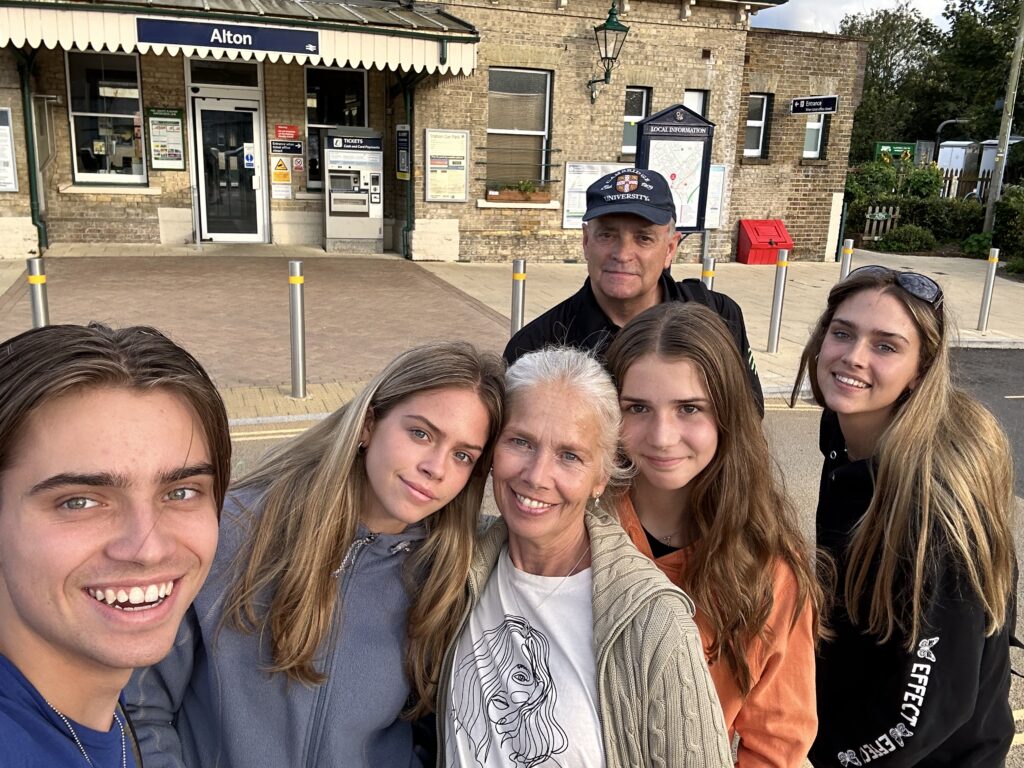
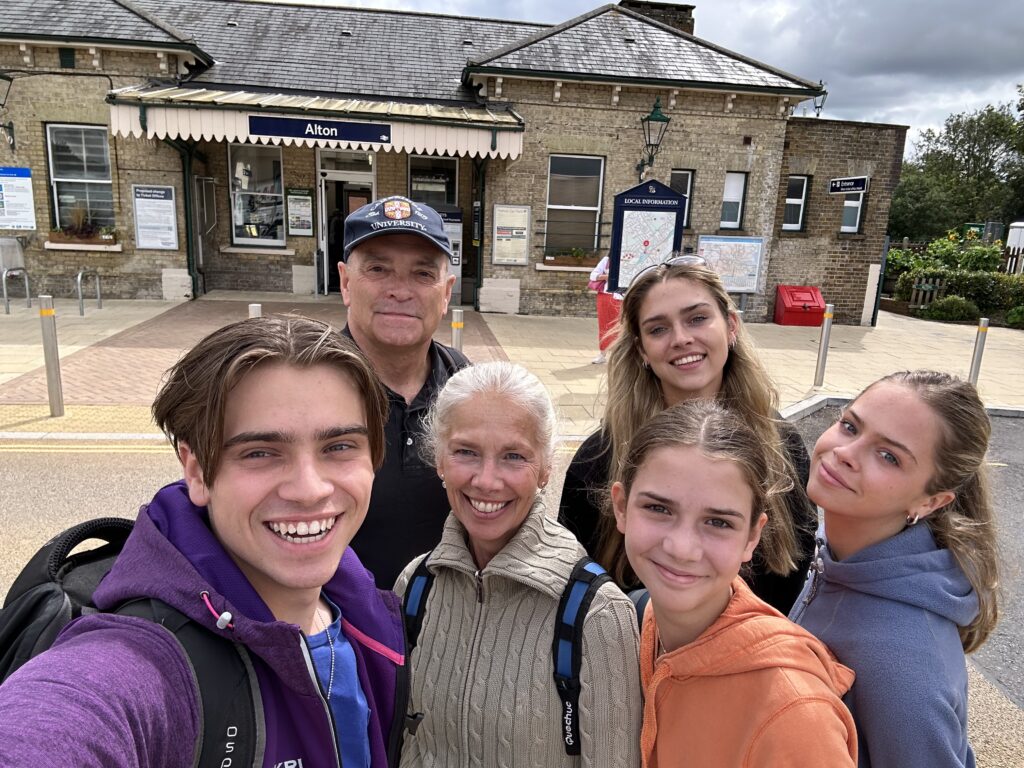
This third leg was pretty special – I finally had the whole Tribe walking together with GD recovered from her surgery. So on a typically British, overcast August bank holiday, we parked the car at Alton station where we’d ended the last leg. A fairly uninspiring start to the walk takes us past garages along roads and Anstey Park’s playing field but soon we arrive in the village of Holybourne and Holy Rood church, a very beautiful building dating back to the 10th Century.
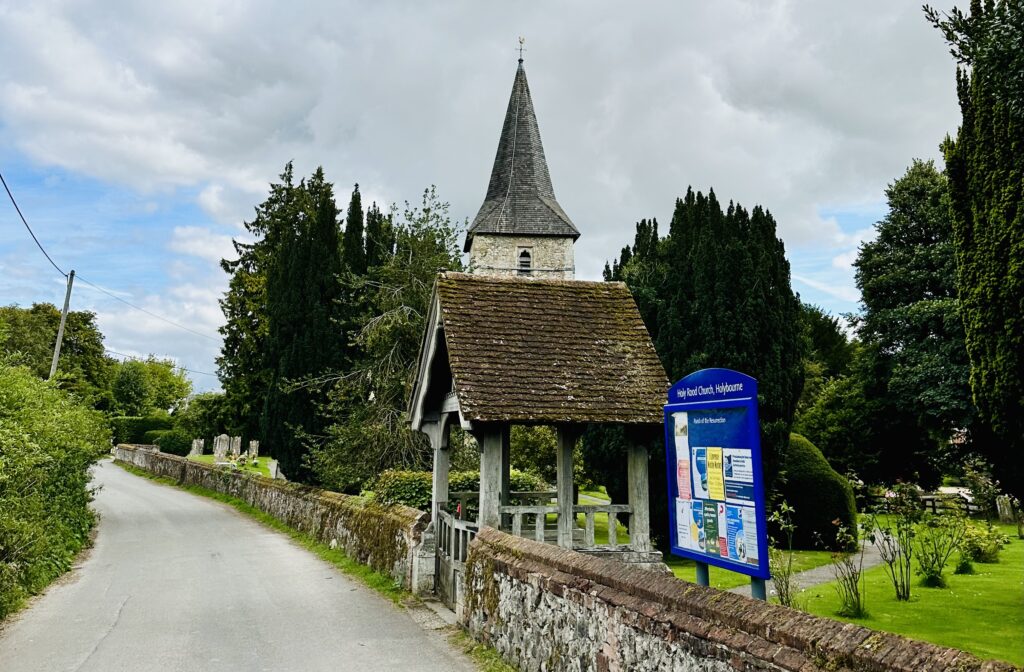
It is at the source of the Bourne, a village pond fed by the ‘holy bourne’ or the Old English ‘Haligburna’ meaning ‘sacred stream’ (hence the village name) feeding the River Wey. According to the church’s history, it’s believed that the site has been a place of Christian worship since the 7th Century. The water was believed to have healing properties for eye ailments, hence it became a stopping point for pilgrims. Legend has it that a group of pilgrims stopped on their journey from Winchester to Canterbury hot, tired and thirsty. Their leader drove the tall cross he was carrying into the ground and a spring of water immediately gushed up. A shrine was subsequently built. William the Conqueror gave Holybourne (along with the Parish of Alton) to Hyde Abbey.
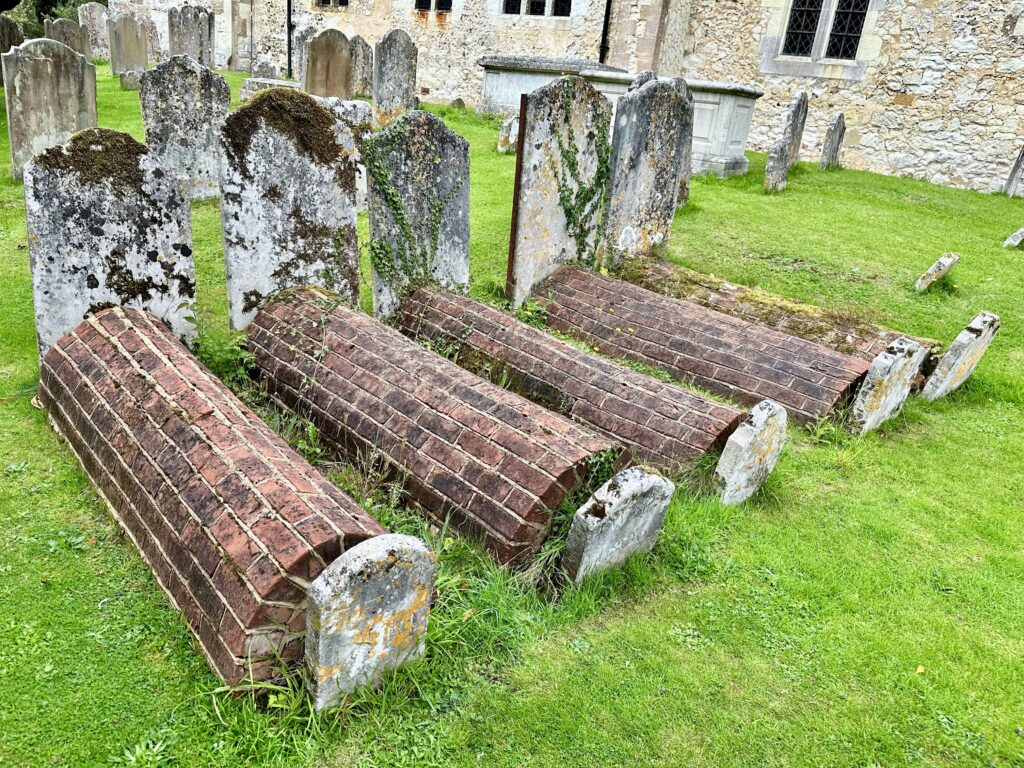
In the graveyard there are some unusual barrel graves made of brick and dating back to the early 18th and 19th Centuries. With a rounded arched top and built above the ground, they were used in marshy areas or under trees where grass wouldn’t grow.
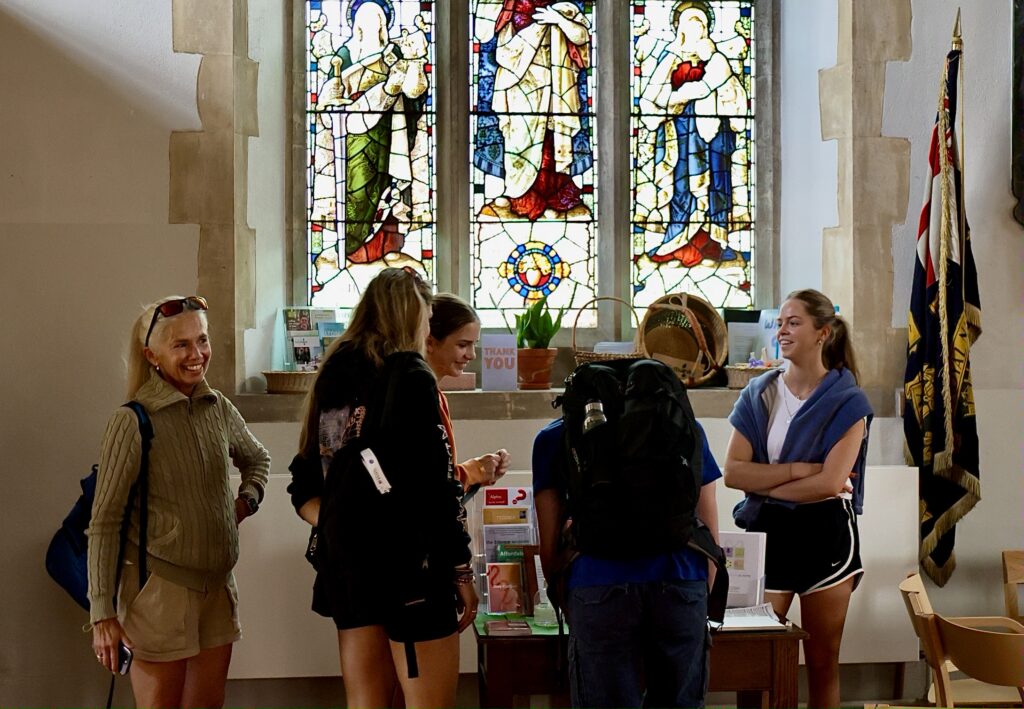
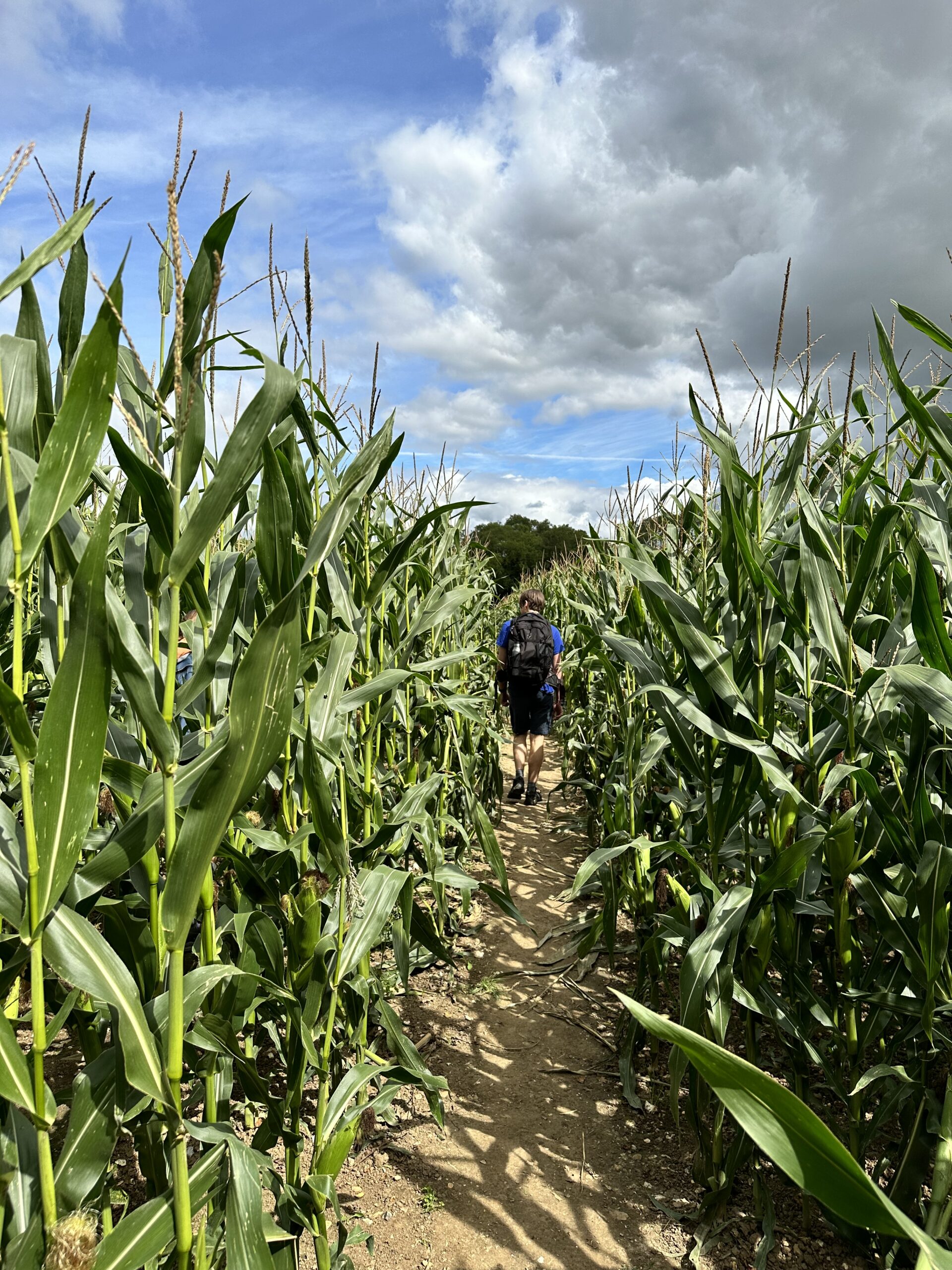
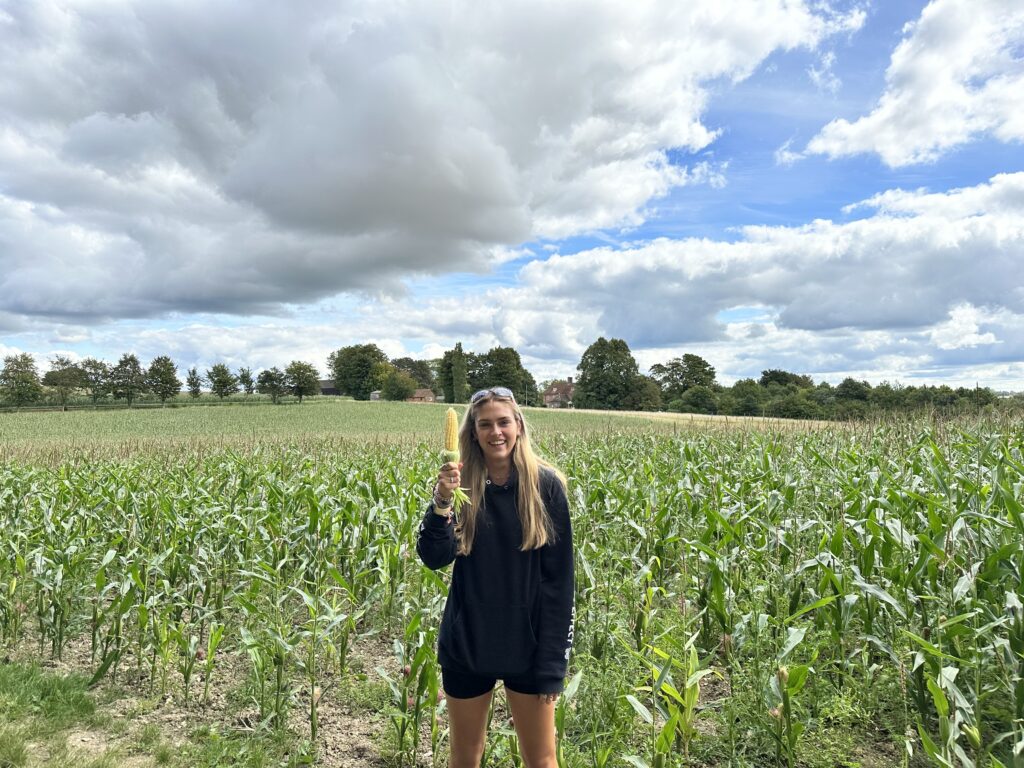
Having stamped our ‘passports’ we find a grassy field to have our lunch before continuing on the path that takes us through a field of maize. The Eldest finds an ear of corn; she strips the husk back to reveal the butter yellow kernels. It returns home with us and has been part of our autumn wreath ever since – an unusual reminder of this leg of the walk!
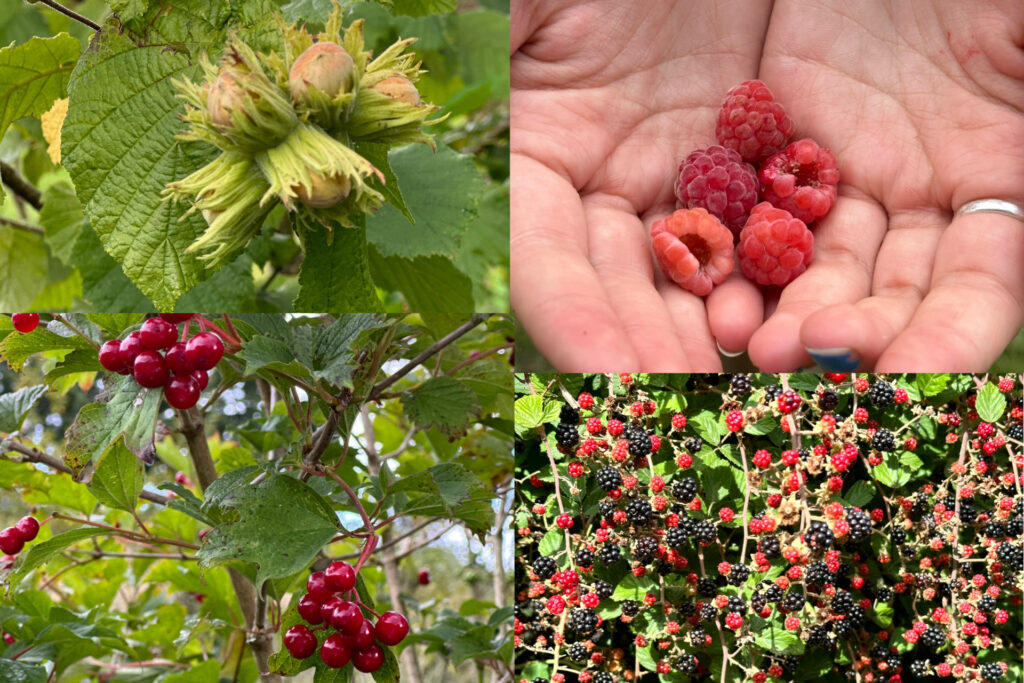
The fields we’re walking through are dusty and caked dry. Brambles chaotically clamber through hedgerows with black berries ripening – some are ready to eat and make good snacks. The Littlest finds an ‘escaped’ raspberry bush laden with perfectly ripe fruit along one stretch. Guelder rose berries gleam red amidst the dense green alongside clusters of cobnuts ripening – a rich bounty for wildlife.
Coming into the village of Upper Froyle we find The Assumption of the Blessed Virgin Mary Church behind an old brick wall.
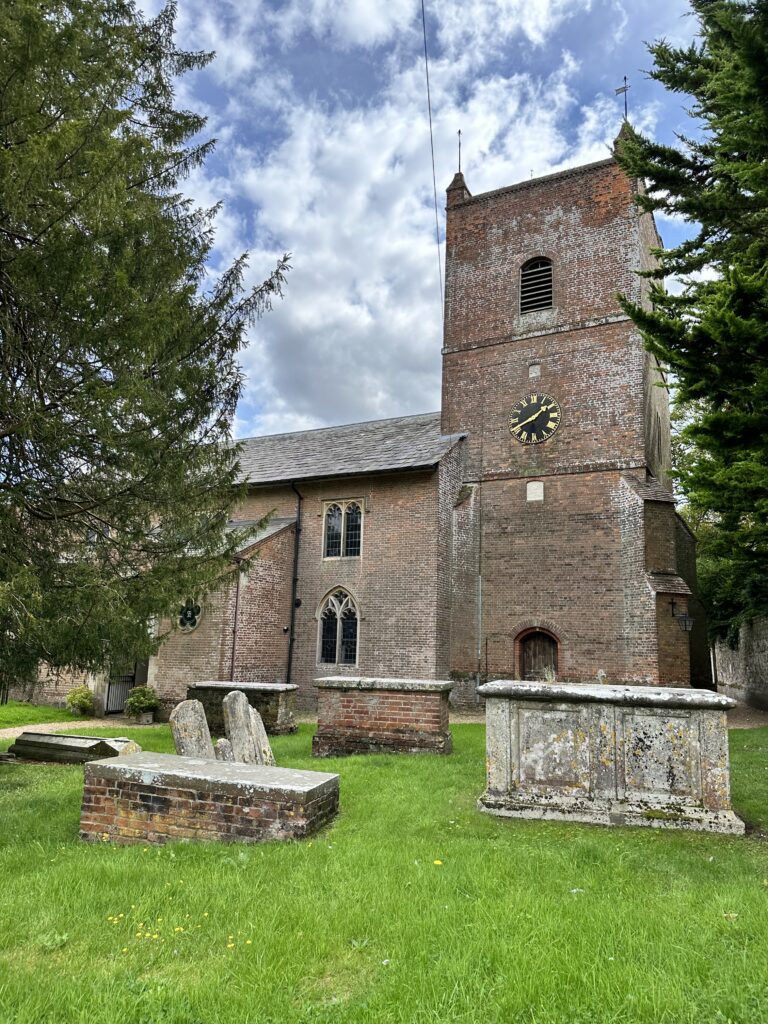
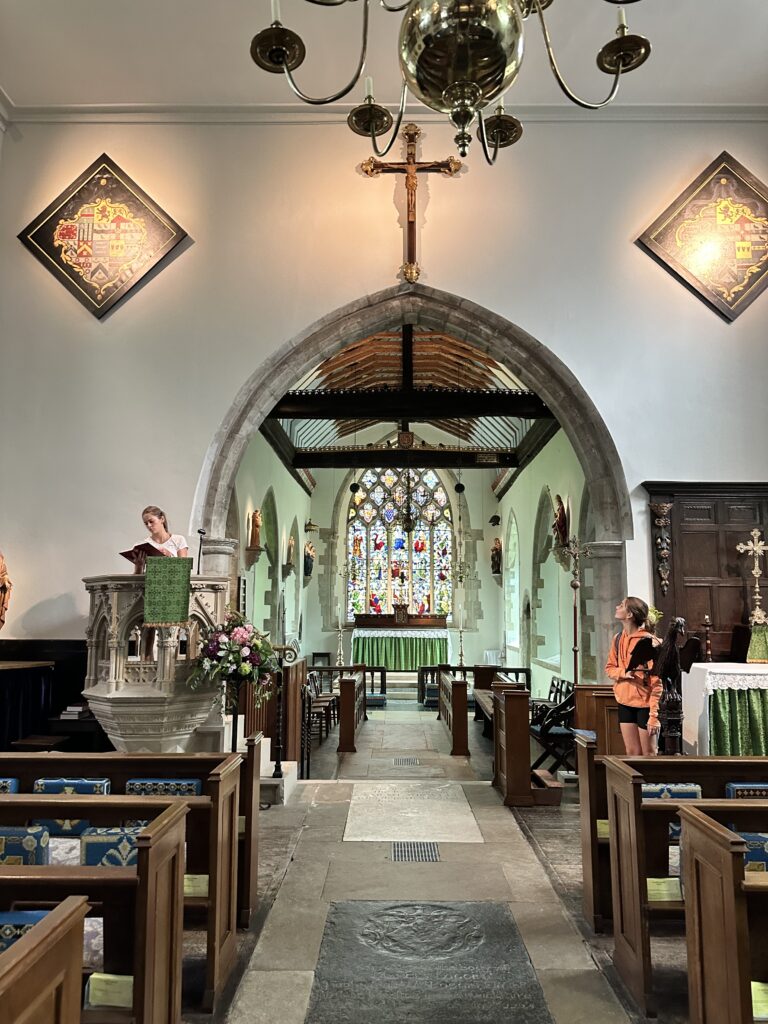
The church dates back to the 1300s and features a 1722 brick tower. There is a modern stained glass window dedicated to the Pilgrim’s Way and another stamp for our passports. Whilst the Boy sorts the stamps, GD reminisces her times speaking as Head Girl in Salisbury Cathedral!
Continuing, the walk takes us across fields and a stream past Lower Froyle and more farm buildings. We pass an old house which we discover once belonged to Lord Baden-Powell, founder of the Scouting movement. He named it Pax (peace) Hill. During WW2 it was occupied by Canadian military troops and after the war it was given to the Girl Guides Association to be used as a centre for members from the Commonwealth. In 1953 it was sold and subsequently used as a care home with a large modern wing. The path runs alongside the property but it disappears from view with thick hedgerows and trees.
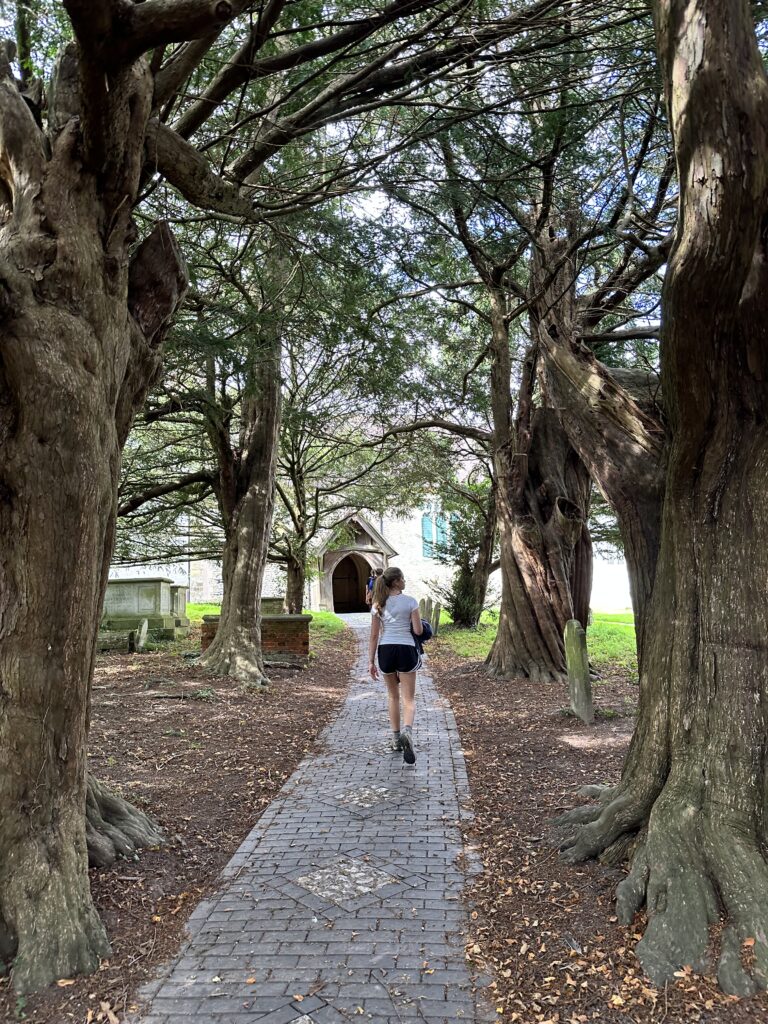
A small row of cottages marks our arrival into the village of Bentley and another church – St Mary’s, dating from the 12th Century. Here, it is the entrance to the church that is quite beguiling, as the pathway is lined with ancient yew trees forming a beautiful natural archway. It’s believed that the oldest yew trees here are about 350 years old. Gilbert White the ‘parson-naturalist’ who wrote the Natural History of Selborne, mentioned “…I walked up to Bentley church … the avenue of aged yew-trees up to the church.” Their branches spread so wide that some need to be propped up with posts – with the dappled sunlight filtering through, it is an atmospheric walk into the church.
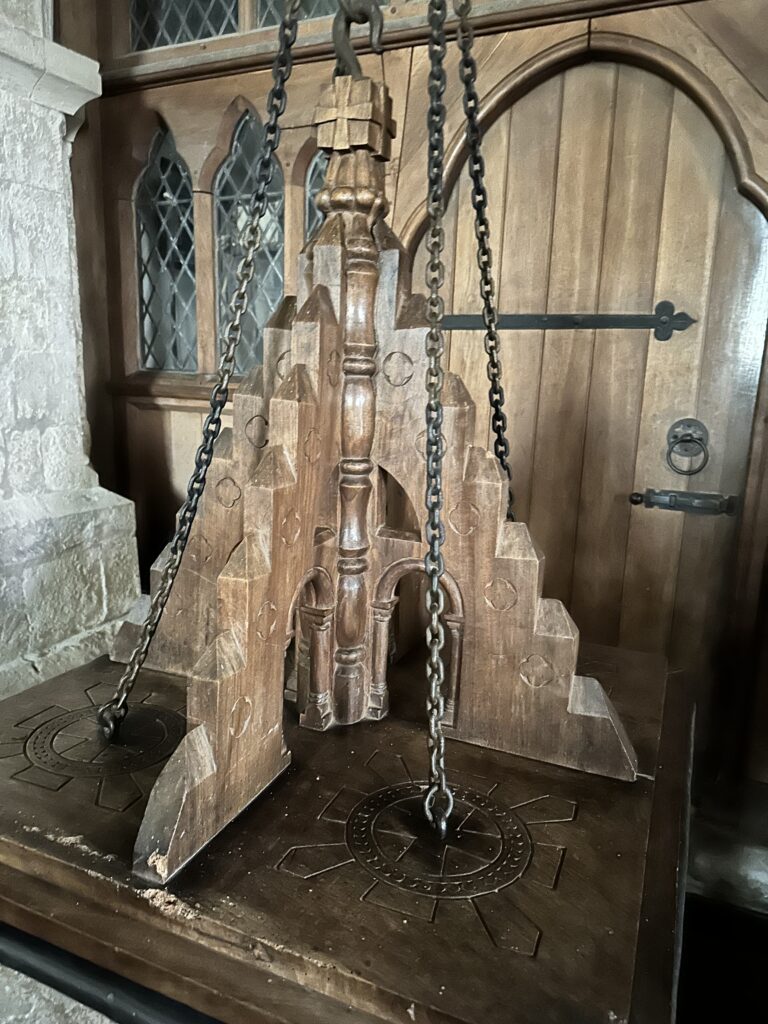
Inside there is an unusual late 12th Century Norman square shaped font cover that is raised and lowered by a pulley system. Having stamped our ‘passports’ again, we return to the route and continue along and across end-of-summer dry and harvested fields, the sun now hidden by low ominously dark clouds.
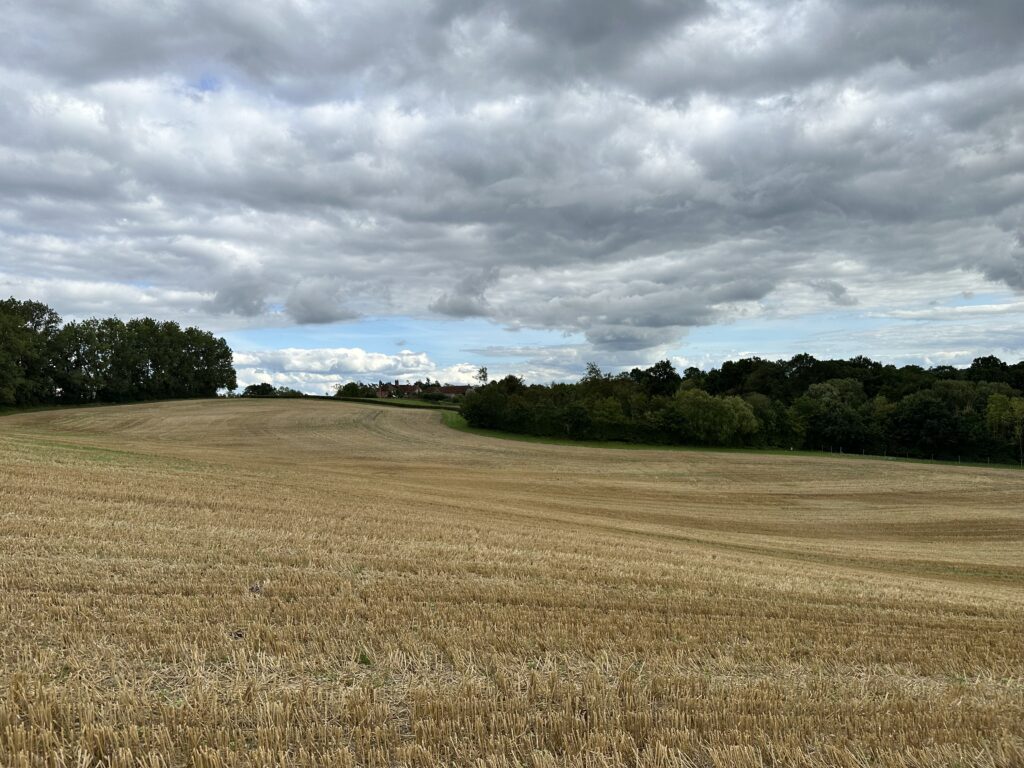
An overgrown path climbs past Dippenhall and we cross from Hampshire into Surrey before joining a quiet country road that climbs steeply. Before long we find ourselves opposite the outer walls of Farnham Castle where building originally began back in 1138 by Bishop Henry de Blois as a midway residence between Winchester and London. King John visited frequently in the early 1200s before Prince Louis of France took the English throne in 1216 occupying Farnham Castle (and Guildford Castle). A year later the Earl of Pembroke took the Castle back. During her reign, Elizabeth I visited the Castle several times. In 1501, Richard Foxe was made Bishop of Winchester by Henry VII (having supported Henry’s bid for the throne) as well as being one of the King’s chief ministers. However with the rise of Thomas Wolsey under Henry VIII he left his position of power in government concentrating on his work as a bishop spending much time at Farnham Castle. As well as a diplomat, Foxe was also an educationalist, and he founded Corpus Christi College, Oxford (having studied at both Oxford and Cambridge universities). In the last ten years of his life he became blind and it’s believed that this is when he had the steps between the Castle and the town, built; now known as The Blind Bishop’s Steps.
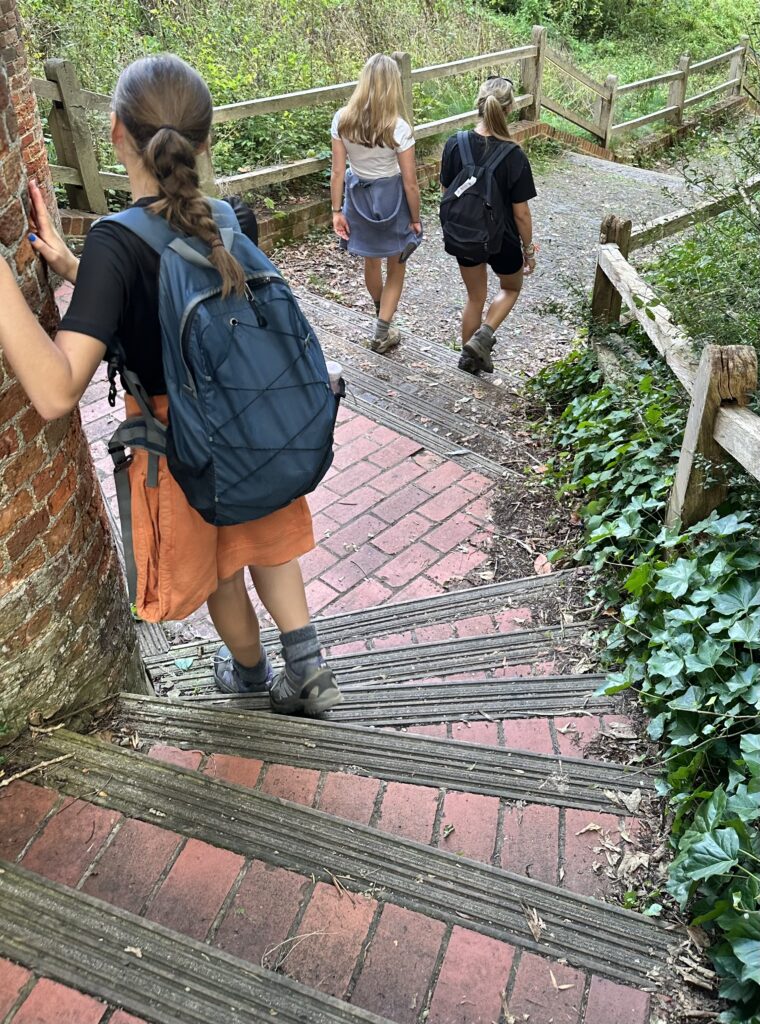
The steps were designed in seven groups of seven flights allowing Foxe to find his way to and from the Castle despite his lack of sight. Within the outer walls, the medieval keep remains. Although the building is now run by an events company, you can still visit on Wednesday afternoons.
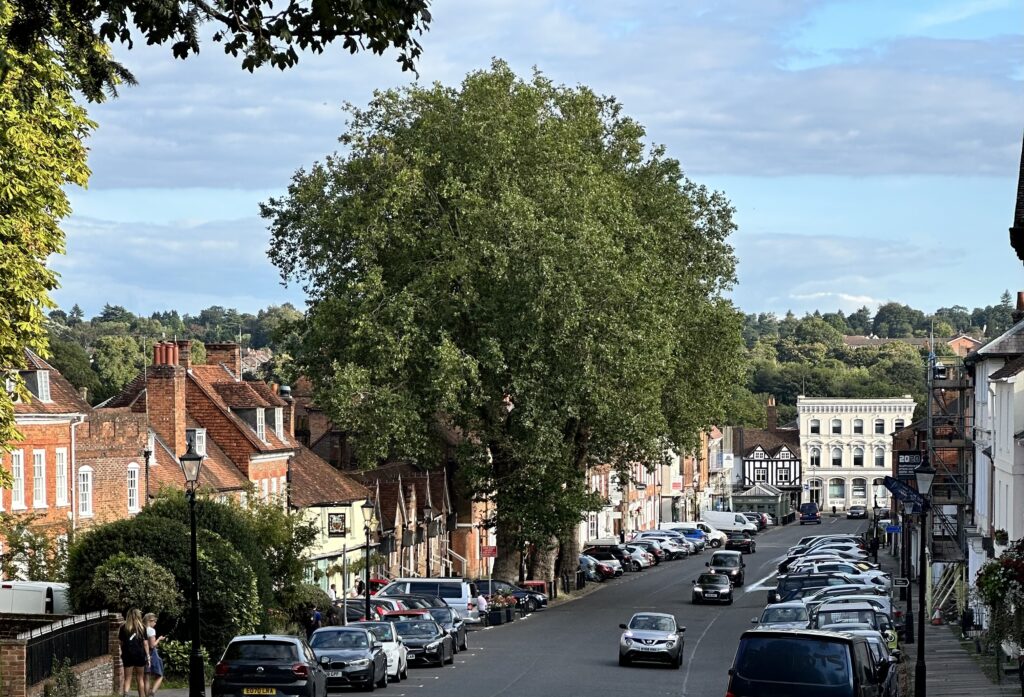
We walk down the steps and into the market town with its Georgian architecture – very beautiful although always spoilt by cars parked either side of the road. We stop at The Mulberry for well earned drinks before catching the train back to Alton; and that’s Leg 3 done.